

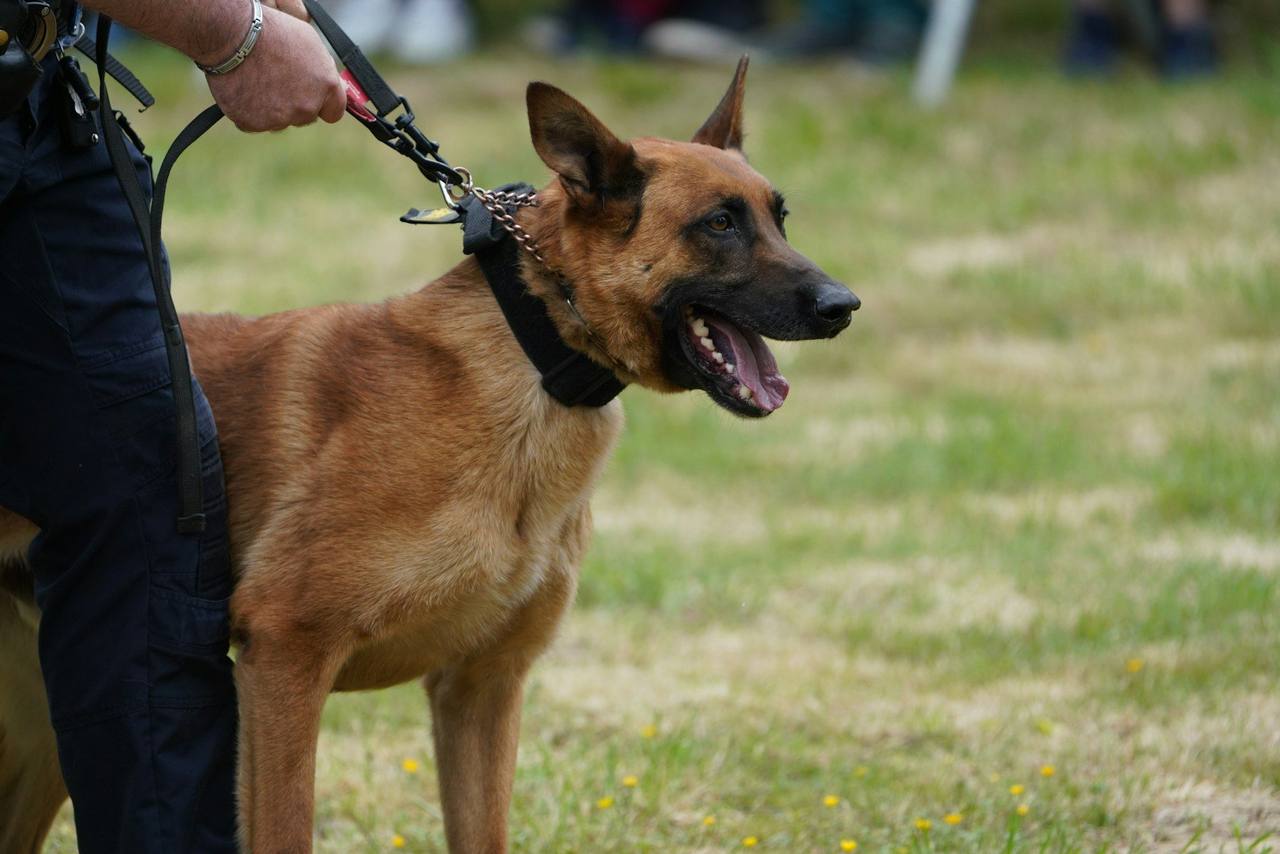
Police chiefs have issued interim advice to forces on testing, quarantining and managing dogs imported from abroad after two Wiltshire Police dogs were found to have Brucella canis and were euthanised, Vet Times reported on 12 October 2026. According to Vet Times, the National Police Chiefs’ Council (NPCC) said the cases were linked to a police dog imported from Europe, without describing the precise nature of the link.
The NPCC told Vet Times it believed the incident was isolated, with no evidence of a broader risk to UK police dogs, and that the interim advice had been issued to chief constables pending definitive national guidance. Vet Times said the NPCC had not answered its further questions about the source of the link or the content of the advice. The publication put the number of dogs working across UK police forces at around 2,500. Equanine has not seen the NPCC statement or the advice itself, and the NPCC’s online newsroom carried no release on the cases when checked on 17 October.
What the force said
Local news site Wiltshire 999s reported on 5 October 2026 that the infections were found during routine testing in September, that the rest of the force’s dog unit was isolated while further testing was carried out and that all of the force’s other dogs had since tested negative. The force said its service to the public had continued as normal throughout and that mutual aid had been arranged for the dog unit when required, the site reported.
Vet Times updated its report on 16 October with a response from Wiltshire Police. According to the publication, the force confirmed that it had isolated its remaining dogs, that all had tested negative and that there had been no operational impact, and said it euthanised the two dogs after seeking veterinary advice, to eliminate any further risk of transmission to other dogs, the public and those who work closely with them. Neither report gives dates for the euthanasia or says how many dogs police forces import each year or from which countries.
Where dogs sit in police tactics
Dogs are a small part of the force recorded in official data. Home Office use of force statistics for England and Wales, published on 15 October 2026 and covering the 43 Home Office funded forces and the British Transport Police in the year to 31 March 2026, count the use of dogs, including cases where a dog was deployed but did not come into contact with the person, within other tactics. Other tactics were recorded 74,084 times, 6% of the 1,211,824 tactics recorded across 866,471 use of force reports.
Table 1 of the accompanying data tables gives the dog figures separately: police used dogs 3,617 times in 2025/26, against 3,347 in 2024/25. Of those 3,617 uses, 2,812 were deployments and 805 were bites, up from 737 bites the year before. The release does not give the number of police dogs in service or what forces spend on them.
Equanine’s reading
- Interim advice on testing and quarantining imported dogs could add screening steps and holding time for forces that buy dogs from Europe. Suppliers able to document health testing before sale may find that an advantage.
- The definitive national guidance has not been published, so suppliers do not yet know what standard will apply or whether it will cover dogs bred in the UK. Its content is the next thing to watch.
- With around 2,500 dogs working across UK forces on Vet Times’ estimate, and dog use in England and Wales rising year on year in the Home Office tables, police are a sizeable buyer of trained dogs, and any tightening of import practice could shift some of that demand between overseas and UK breeders and trainers.